
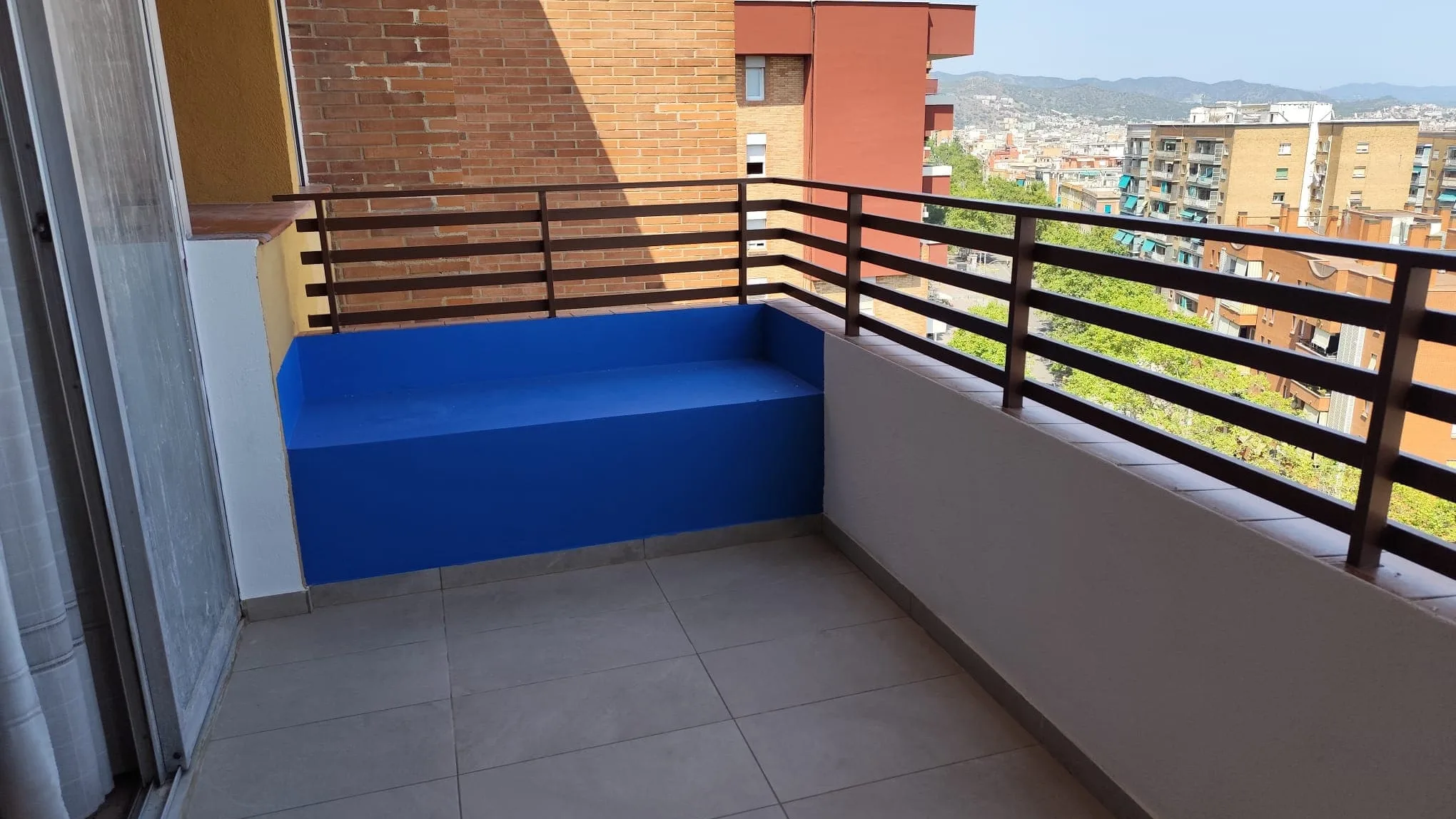
Nou Barris · Barcelona
Comprehensive renovations in Nou Barris
Almost all the housing stock in Nou Barris went up between the 1950s and the 1970s. These flats take renovation very well, but they almost never let you renovate only what you can see: the services go in as a whole. Here we explain what to check first, what happens with your building’s ITE inspection and where to start if money is tight.
- Site visit and measurementsbefore we quote
- Detailed quoteitemised, with no obligation
- Site manageron site and following up
- Extras approved beforethey are carried out, never after
What you will find in a building from the 1950s to the 1970s
A good part of the district is housing developments from that period, with modest floor areas and compact layouts. Three features come up again and again, and all three show up in the quote.
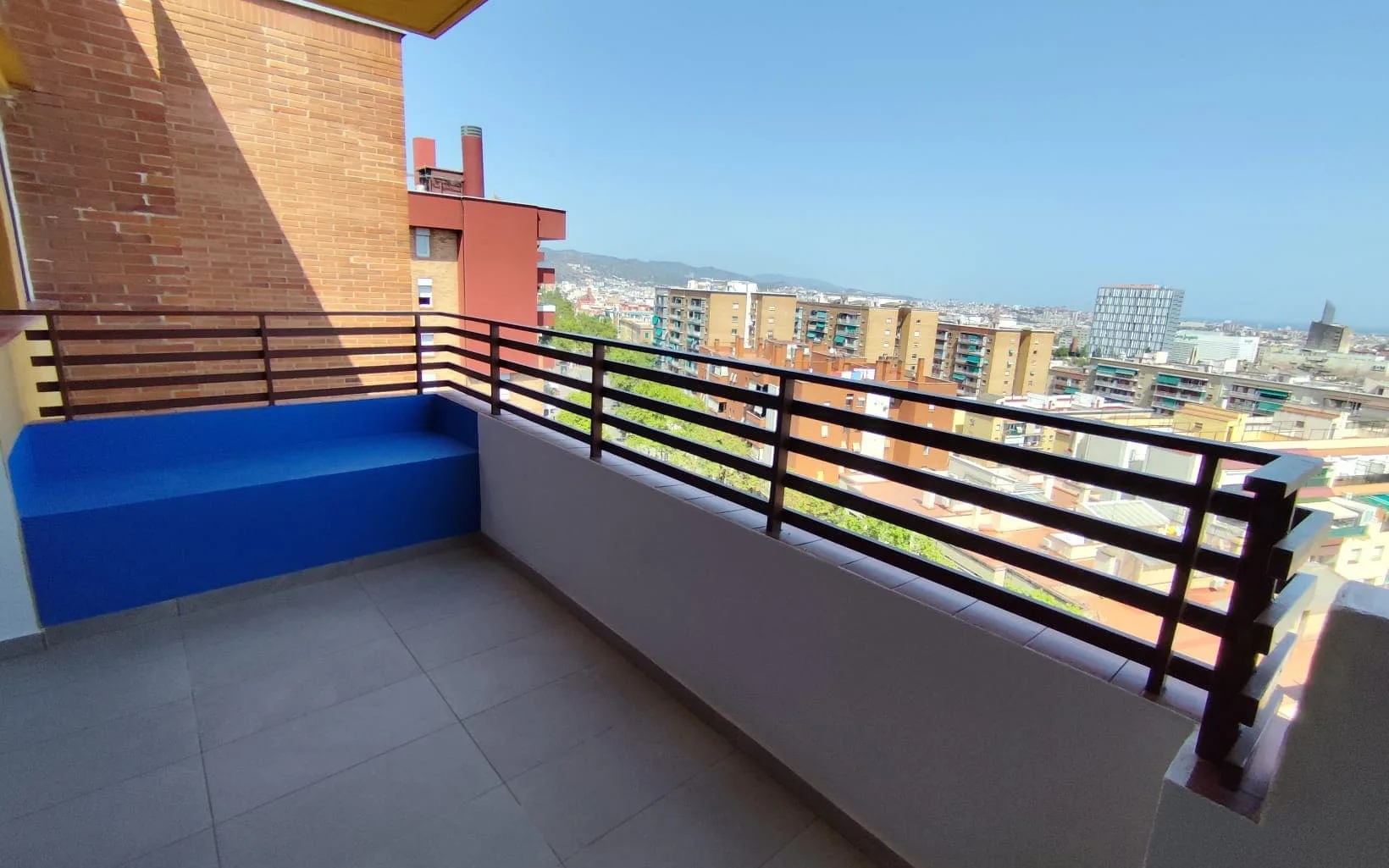
The services, which go in as a whole
These flats were wired for a home with a fridge, a radio and not much else. Today the consumer unit falls short, there are no separate circuits and a good part of the run goes where it should not. Something similar happens with the plumbing and the drainage: materials nobody installs any more and joints made in several rounds.
That is why a single-room job is difficult here. It can be done, and sometimes it is the right call, but you have to decide it knowing that the home’s services are still the same the next day and that next time the walls will have to be opened again.
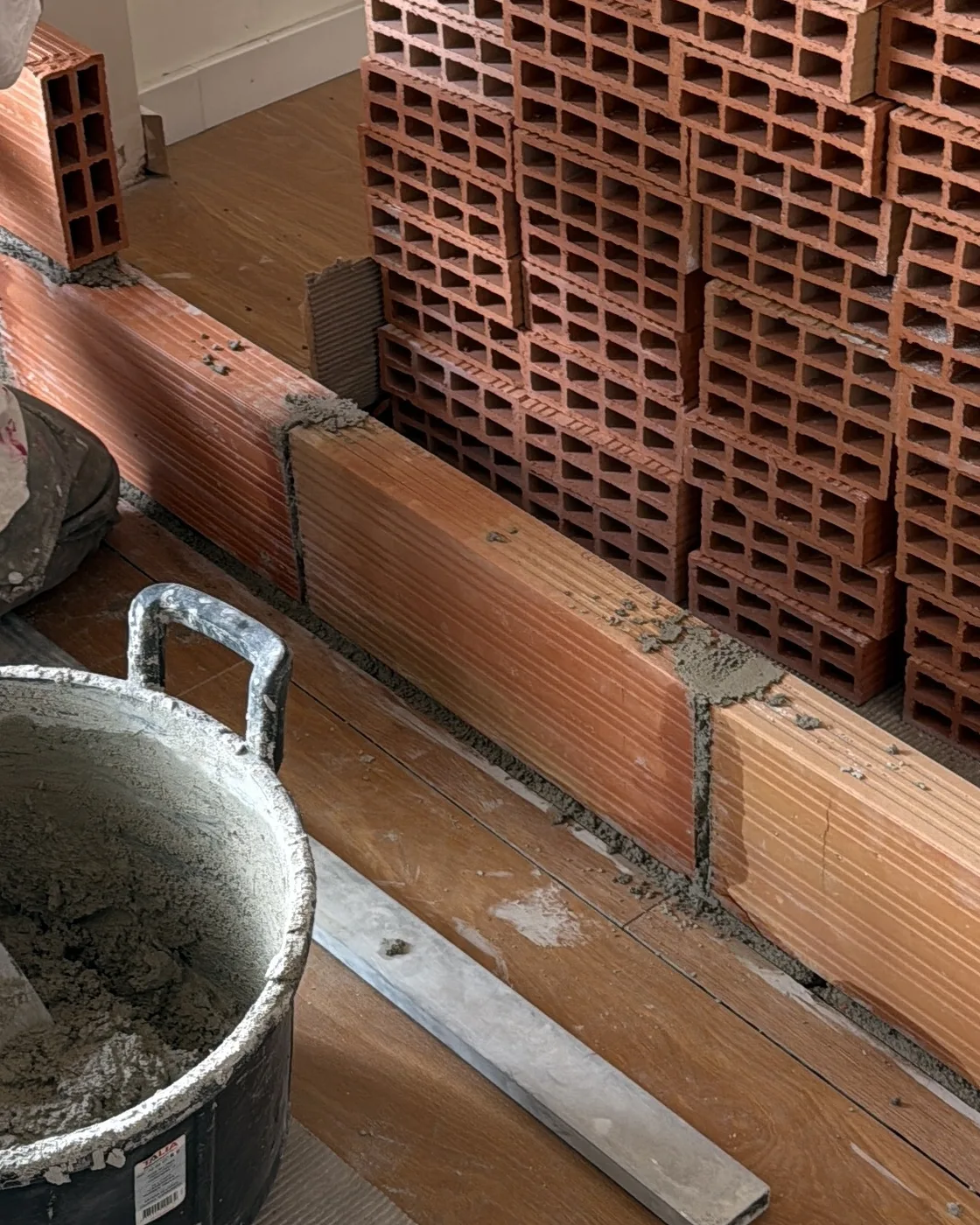
The layout, with too much corridor
A compact floor plan: a long corridor, a closed kitchen, small bedrooms and a wet area that stayed wherever it was put. The good news is that almost no partition wall is structural and that the wasted square metres are in the easiest place to win back.
With a well thought-out new layout, one of these flats moves up a class without gaining a single square metre. There are two useful pieces on that: reconfiguring the layout to gain light and cutting the endless corridor.
The lift and the street
In many buildings of this period the lift was fitted after the building had gone up, and that leaves runs stopping at half-landings, tight lift cars and shafts through which an assembled unit will not fit.
Add to that the fact that much of the district climbs towards the hills, with sloping streets and entrances with steps. None of this stops a job; it simply has to be measured beforehand, because it decides what goes in assembled, what goes in as separate parts and how much it costs to move material.
What your building’s ITE says overrides the project
Buildings from that period were built with solutions that are now under technical scrutiny, and in Barcelona there are buildings from those years with structural damage on record. It is not a feature of the neighbourhood: it is a feature of a way of building at a particular time, and it is checked building by building.
The important thing is that this is already diagnosed or can be diagnosed, and it is not a renovation company that diagnoses it. Your residents’ association’s technical report says so, and so does the Inspección Técnica del Edificio (ITE). If your building has an ITE with defects, that document overrides any interior project: there are elements that are not touched without a qualified surveyor and there are works that are done in a set order.
Our position is simple, and we will not soften it to win the job: we ask for that document, we read it, and if anything you want to do comes into contact with a structural element or with a recorded defect, we say so and refer you to a qualified surveyor. We do not sign off an interior job on top of an unresolved structural problem. What is worth checking beforehand is in ITE and renovations: what is worth fixing before the inspection.
What we do in Nou Barris
Comprehensive home renovations — the whole job, with new services and an itemised quote, set out in comprehensive renovations in Barcelona— and partial renovations, which here are the majority: bathrooms, kitchens, flooring and parquet, painting and electrics.
We also work on the commercial premises and we do masonry when what is needed is one specific piece of work and not a whole job.
Where to start if money is tight
We are asked this a lot and it deserves a real answer, not an “it depends”. The order we recommend is always the same and it has nothing to do with what you feel like changing first.
And there is one earlier decision that really does save money: if you are going to open up walls, run the services through even if the finish comes later. Cabling and sockets where you will want them in two years’ time, even if the unit or the light fitting is bought further down the line. Opening the same wall twice is the most avoidable expense in a renovation. There is more guidance in a limited budget: what to do first and in grants and subsidies for renovations.
- What is failing. An unsafe electrical installation, a leak, active damp or a drain that will not clear come before any finish. If you leave them for later, you will have to break into what you have just paid for.
- What gets used every day. The two wet areas, in that order if only one will fit. They are where a renovation is felt every morning and the ones that count for most if you ever sell or let.
- What is seen all at once. Flooring and paint change how the whole flat is perceived, at a cost that is not split room by room, and they can be done without touching the services.
The floor you sometimes do not need to rip out
On one job in the neighbourhood we found a large living room opening onto a terrace and a finger-block parquet floor with the chequerboard pattern you see in many older flats. The wood was sound underneath, but the whole thing looked dull: matt patches from the traffic, marks, the odd open joint and an unfinished perimeter.
When the wood is stable, throwing it out is throwing money away. Before deciding anything the floor is looked at the way a surveyor would look at it: whether it moves, whether there are sunken areas, whether it creaks for want of fixing and whether there is damp underneath. If the diagnosis is good, it is repaired, sanded and varnished, and the living room changes all at once: it gains light and it looks clean, with a fraction of the work and of the rubble.
It is set out in full in restoring a finger-block parquet floor in Nou Barris. More completed work of this kind, in our parquet and flooring projects.
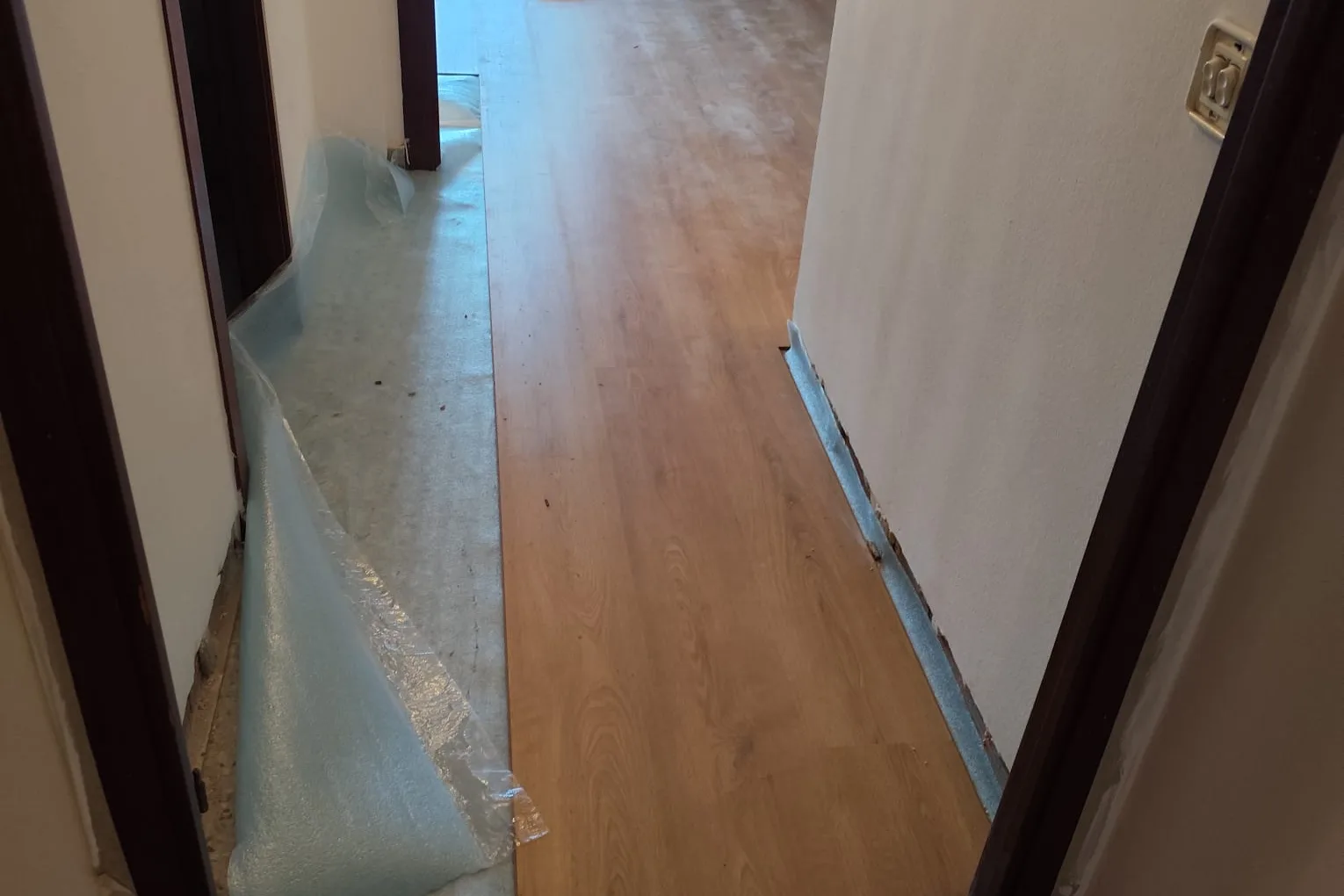
How we run a project
There is no one person who does everything, and we would rather say so: you talk to two people and you know which one for what. The site manager runs the works and the follow-up in the home; administration handles purchasing, invoicing and paperwork.
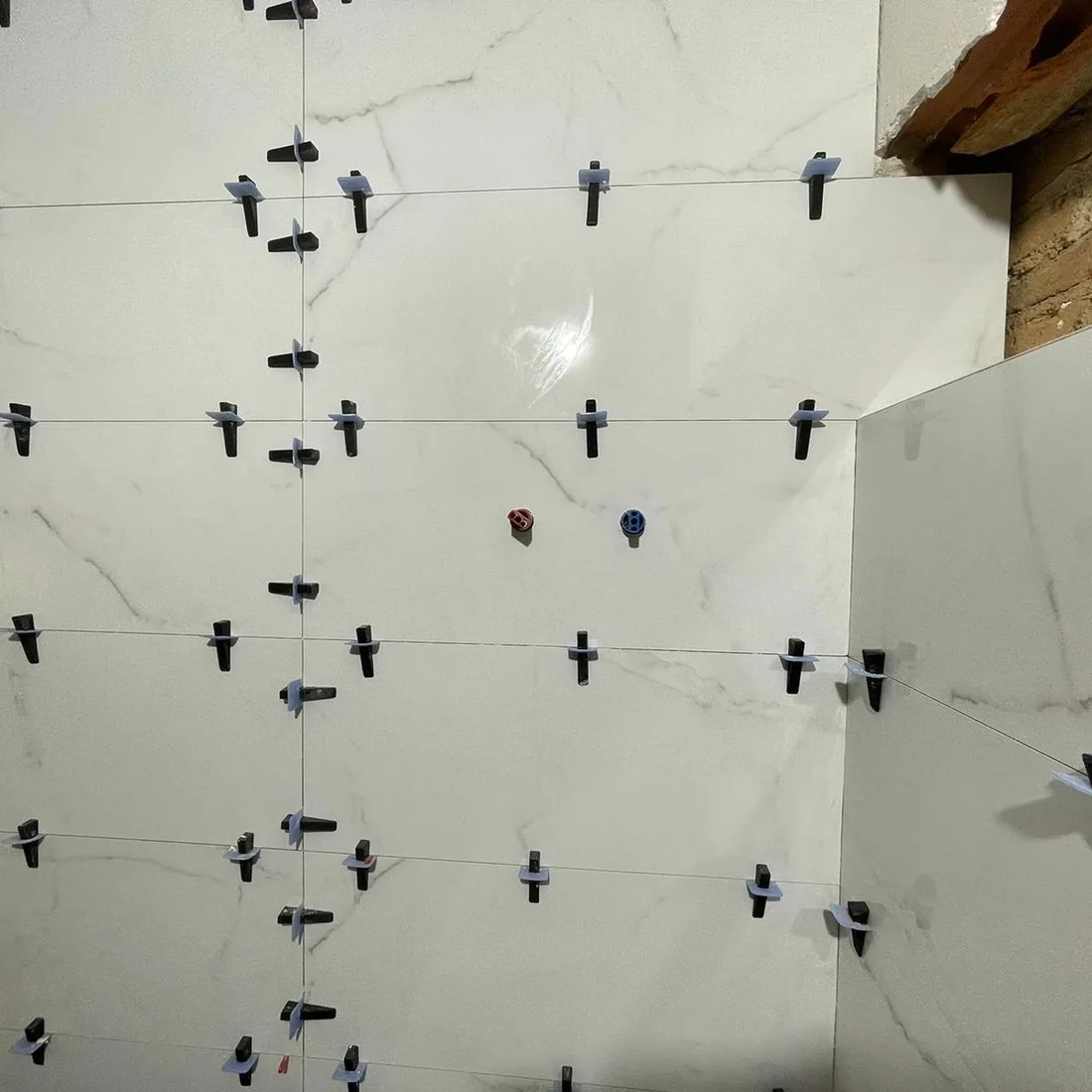
- Visit and measurements. The consumer unit, soil stacks, light wells, the lift, the stairwell and access from the street. And the ITE, if the building has one.
- An itemised quote. Separate sections, with no “sundries” catch-all, so it is possible to decide what goes ahead now and what waits.
- Paperwork and the residents’ association. We check what the scope requires and we notify the building before we start.
- Protection and logistics. Entrance hall and lift protected, waste removal route agreed and rubble taken away, not piled up.
- Phased execution. Demolition, services, waterproofing, tiling, fitting out and finishing details.
- Handover. Function tests, a room-by-room check and whatever documentation applies.
What it costs and how long it takes
Of the five bands we publish, the first two are the ones that matter most here.
The partial update — keeping many items and renewing finishes, flooring or specific areas — is the lowest band, and the standard comprehensive renovation, with new services and complete finishes, runs from €750 to €1,050/m². The five bands are in comprehensive renovations in Barcelona. These are a guide only: the real figure comes out of the site visit.
In these flats one thing has to be clear: if the services go in as a whole, the partial update band does not apply however small the floor area is. A bargain price with new services included is not being cheap: it is leaving something out. Comparing item by item is the only thing that catches it, and we explain it in comparing quotes and spotting inflated items.
On timing. A comprehensive renovation takes between 6 and 12 weeks as a guide, depending on the floor area, the new layout, the condition of the services and the finishes. It is not a scheduling commitment: it is set by milestones after the site visit.
What our clients say
5,0
55 reviews on Google

Contamos con Obrescat para la reforma y acondicionamiento de nuestra terraza (instalación de estructura metálica, arreglos de fachada, pintura y pequeños acabados) y el resultado ha sido justo lo que buscábamos.
Desde la fase de estudio del proyecto la comunicación fue excelente: contestaron rápido y con total disponibilidad para resolver todas nuestras dudas.
Durante la ejecución, el equipo fue muy puntual, atento y sobre todo flexible, adaptándose sin problema a los cambios de días y horarios que les pedimos.
Estamos muy contentos con la calidad final del trabajo. Los recomiendo sin duda.

Lo mejor de trabajar con Obrescat ha sido sentir que había seguimiento real durante todo el proyecto. Nerea hizo un gran trabajo en la fase inicial, tanto a nivel comercial como a la hora de preparar el presupuesto, siempre con transparencia. Después, Manuel coordinó la obra con profesionalidad y supo resolver bien los pequeños ajustes que fueron apareciendo. Como empresa de reformas en barcelona, nos han parecido muy recomendables por su implicación.

Después de comparar varias opciones, elegí esta empresa de reformas porque me transmitió confianza y profesionalidad. El resultado ha superado mis expectativas, la cocina ha quedado increíble. Muy recomendados en reformas Barcelona

Contratamos a Obrescat para la reforma integral de nuestro local comercial en Barcelona y la experiencia ha sido excelente. Necesitábamos adaptar completamente el espacio para abrir nuestro negocio y nos ayudaron tanto con la distribución como con los acabados y la iluminación.Muy recomendable esta empresa de reformas para proyectos de reformas Barcelona y reforma de locales.

Después de una mala experiencia previa con otra empresa, llegar a Obrescat fue un alivio. Buscábamos una empresa de reformas en Barcelona seria y profesional, y con ellos sentimos confianza desde el primer día. Nos ayudaron a definir el proyecto, nos orientaron con materiales y acabados y siempre fueron claros con los tiempos y el presupuesto.
Durante la obra estuvieron muy organizados, el piso se mantuvo bastante limpio dentro de lo posible y cualquier duda se resolvía rápido. No tuvimos sorpresas desagradables ni sobrecostes inesperados, algo que hoy en día se agradece mucho en el sector de las reformas Barcelona.
El resultado ha sido exactamente lo que queríamos. Un equipo muy recomendable.

Obrescat nos hizo una reforma de baño y reforma de cocina en Barcelona y el resultado ha sido excelente. Aprovecharon mejor el espacio, nos aconsejaron bien con los materiales y dejaron todo muy bien terminado. Además, al ver cómo trabajan, nos quedó claro que son una empresa de reformas muy seria y con experiencia. Se nota que tienen oficio y cuidan mucho este tipo de obras

Después de comparar varias empresas de reformas en Barcelona, nos decidimos por Obrescat y fue la mejor decisión. Reformaron nuestro piso de 90 m² en el Eixample y todo salió genial: cumplieron los plazos, no hubo sorpresas con el presupuesto y la comunicación fue constante. Nos ayudaron a elegir materiales, optimizar espacios y hasta nos dieron ideas de diseño que no habíamos pensado. Se nota que tienen experiencia y que les gusta su trabajo. La relación calidad-precio es muy buena, sobre todo para el nivel de acabado que ofrecen.

Gran experiencia con Obrescat en la reforma completa de nuestro baño. Queríamos algo moderno y elegante pero también práctico, y supieron encontrar el equilibrio perfecto.Muy recomendable esta empresa de reformas en Barcelona.

Reformamos todo el piso con Obrescat: baño, cocina y pintura general. Desde el primer momento se nota que son una empresa de reformas en Barcelona muy seria. Cumplieron plazos, ajustaron el presupuesto y el resultado fue excelente.

Trabajo muy profesional con mi cocina en un par de semanas realizada. Destacaría sobretodo la organización y profesionalidad de Nerea y todo el personal en general
Before you hire
The questions we get most from the district. If yours is not here, dial 933 53 54 09 or message us on WhatsApp.
My building has an ITE with defects. Can we still renovate the flat?
It depends which defects they are and what you want to do. Many interior renovations are perfectly compatible with an ITE showing defects in communal elements. Others are not, because they touch something that is still to be resolved. We ask for the document, we read it and we tell you which of the two cases you are in. If a qualified surveyor is needed, we say so even if that holds up the quote.
I have heard about structural problems in buildings from this period. How is it checked?
It is not a renovation company that checks it: a qualified surveyor checks it, with a report, and in Barcelona the usual instrument is the Inspección Técnica del Edificio. It is a matter for the residents’ association, not for one flat. If your building already has a report, start there; if it does not, it is the residents’ association that commissions it.
The lift stops at the half-landing and the car is small. Can it still be renovated?
Yes, but it gets measured first. We decide what goes up assembled, what goes up in pieces and what has to be carried up the stairs by hand, and that goes into the quote as what it is: hours. Discovering it on the day of the big delivery is what turns one day into three.
I have very little to spend. Would you rather not take the job on?
No. We would rather it were done in phases and done well than done all at once and half finished. On the site visit we separate what is urgent from what can wait and we give you the itemised quote so you can decide what goes ahead now. What we never advise is cutting back on the services to pay for finishes.
My floor is finger-block parquet and it is very worn. Does it have to come up?
Not necessarily. If the wood is stable and there is no damp underneath, it is repaired, sanded and varnished, and it comes up like new for considerably less and with far less rubble. If it moves or creaks for want of fixing, then yes, something else has to be considered. That is decided by looking at it, not from a photograph.
Are there grants for renovation work?
There are schemes that keep changing and that depend on the type of work — energy efficiency, accessibility, refurbishment of communal elements — and they are often applied for at residents’ association level, not flat by flat. It is worth looking into before you start, because almost all of them require you to apply before carrying out the work. There is a summary in grants and subsidies for renovations.
Tell us what year your building dates from
Tell us the year of the building, which floor you are on and what you want to do. We come and see it, we measure up and we send you a detailed itemised quote, with no obligation.
If it is easier for you, call us on 933 53 54 09