

Horta-Guinardó · Barcelona
Comprehensive renovations in Horta-Guinardó
Here the job starts in the street. There are entrances a lorry cannot reach, streets with steps and slopes that a loaded trolley has to come down slowly. We look at all that before we quote, because it means hours, and hours cost money. Then we strip the flat out, rebuild the services and fit the kitchen, bathroom, flooring and finishes, with a detailed itemised quote.
- We check access before we quotestreet, gradient and entrance
- Detailed quoteitemised, with no obligation
- Site manageron site and following up
- Extras approved beforethey are carried out, never after
What changes when the entrance is on a hill
In a flat neighbourhood this would not be a section of its own: it would be one line in the works plan. In Horta-Guinardó it decides the quote and the schedule, and we look at it with the address in front of us before we give a figure.
Where the vehicle stops and how many metres there are to the door
There are streets in this district a lorry cannot turn in, and entrances you only reach by climbing a flight of steps. When the vehicle has to stay fifty or a hundred metres away, someone covers those metres pushing a trolley, there and back, with every load of material and every load of rubble.
It is the item people underestimate most and the one that causes the most grief halfway through a job. So when you give us the address, the first thing we do is not open the catalogue: it is look at how you get in.
The skip on a slope
A skip on a sloping street is not placed the same way: it needs chocking, the lorry needs room to manoeuvre to drop it and collect it, and sometimes it simply will not fit where it ought to go.
When that is not possible, we work with bags and more frequent collections, which comes at a different cost. It is decided beforehand, not on day one.
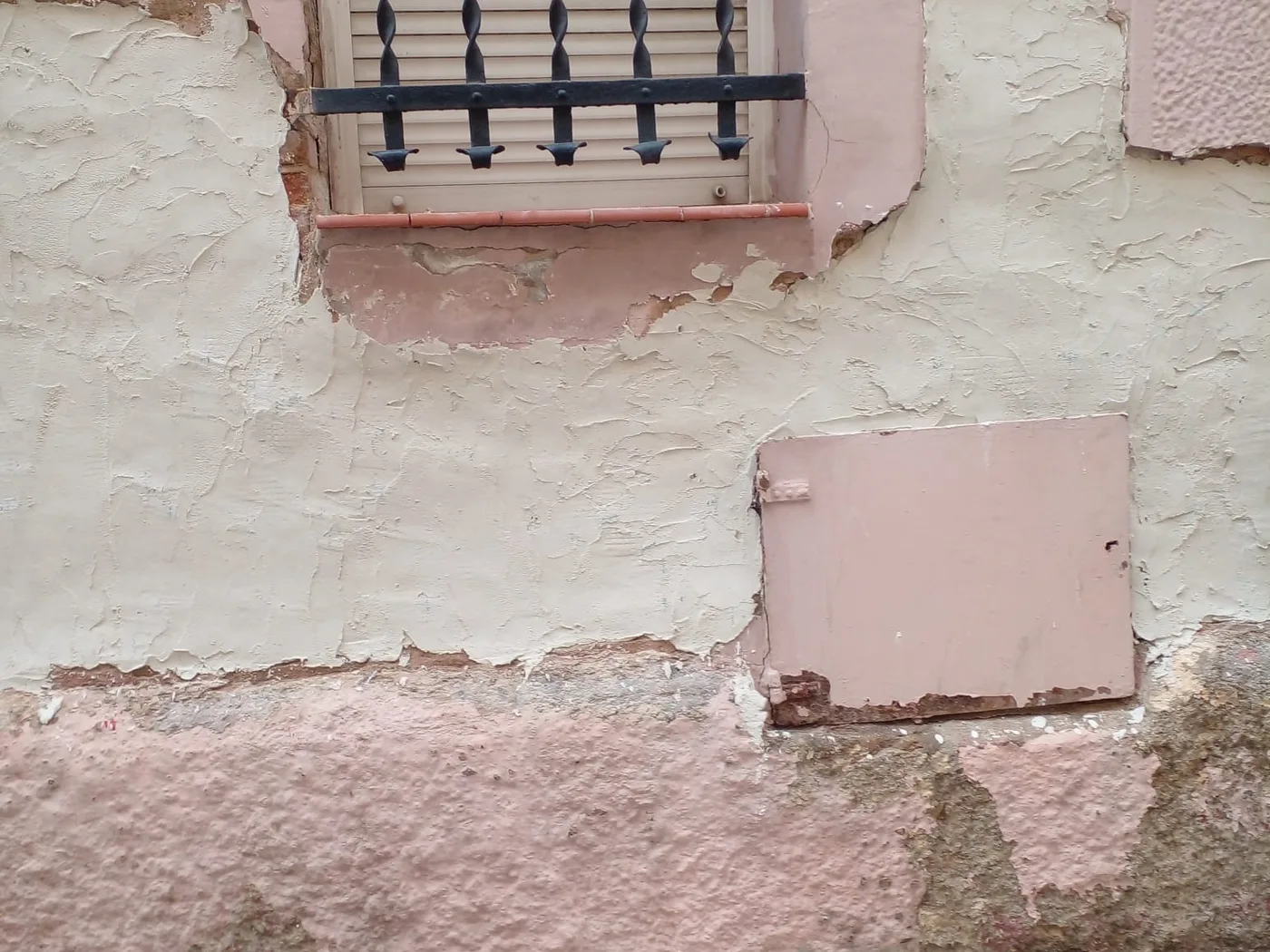
When the entrance is not at street level
In buildings on a hillside it is common for a flight of steps to sit between the pavement and the lift, or for the lift not to reach the actual entrance floor. That flight, however short, is where everything has to pass.
We measure it along with the staircase and the dimensions of the lift car, because that is what tells us whether a bath, a single-piece worktop or an assembled unit will go in, or whether they have to be ordered in parts.
The blocks from the middle decades of the century
A good share of the homes in the district are in blocks put up in the middle decades of the twentieth century. They were built fast, for a lot of people, and to the requirements of the day. That leaves a fairly recognisable pattern.
They usually have a sound structure and a compact layout that works: it is not a flat you have to reinvent, it is a flat you have to bring up to date where it has aged. And what has aged is almost always three things: the electrical installation, the external joinery and the kitchen, which was designed closed off and small.
The joinery deserves a paragraph of its own. Many of these homes still have the original aluminium, with no thermal break, single glazing and all the noise and cold that brings. Replacing it is one of the changes you notice most day to day, and one of the few you can make without renovating the whole house: we go into it in windows, noise and thermal insulation and in how to make your old flat more efficient. It also depends on whether the residents’ association has any restrictions on the façade, so that gets checked first.
The electrical installation is the big section here
In these homes the wiring is almost never the wiring that was designed: it is what was designed plus everything that was added over fifty years.
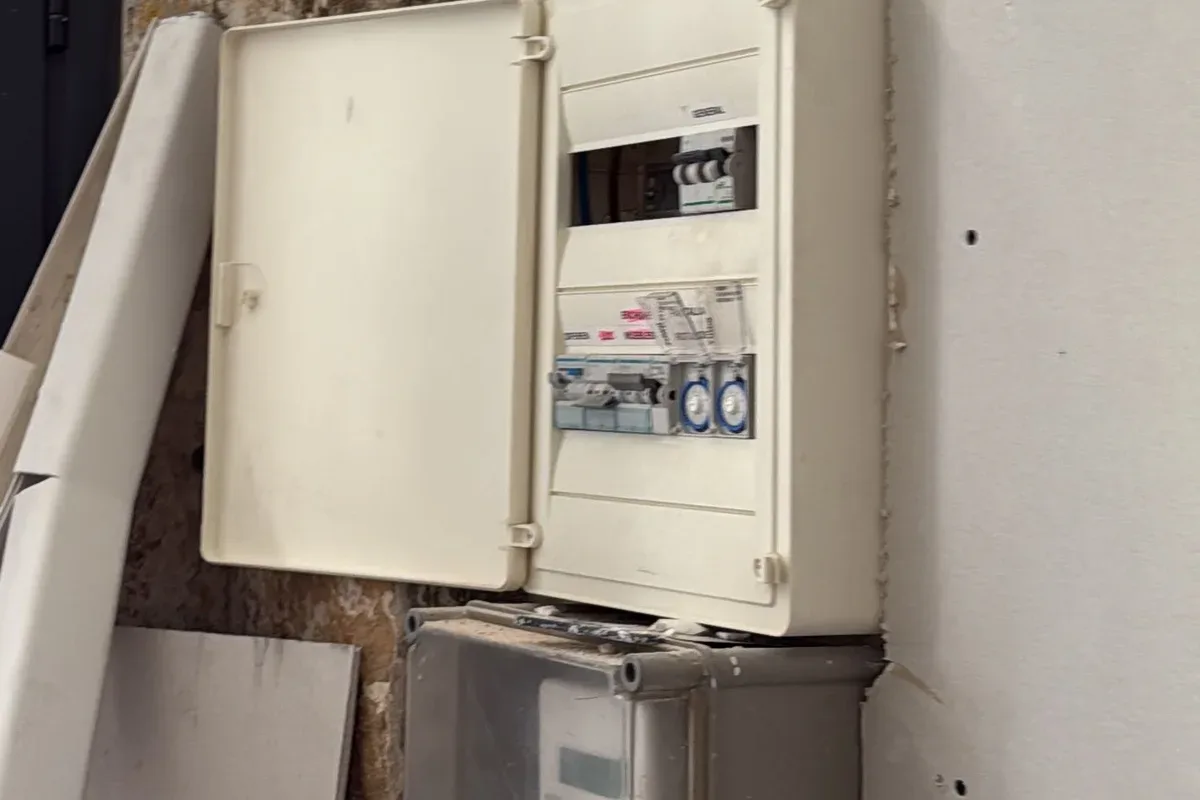
What we find when we open up is usually this: a consumer unit with too few circuits for everything that gets plugged in today, sockets hung off whichever circuit was nearest, cable cross-sections that no longer match the power being drawn and junction boxes plastered over inside the wall. It works until it stops working, and it usually stops working the day the new oven and hob arrive.
Redoing it completely means a new consumer unit with separate circuits, correct cross-sections, sockets where they are actually used and accessible junction boxes. It is the least eye-catching item in the quote and the one that changes most about how the house is lived in. If that is all you need and not a full renovation, we have an electrician in Barcelona page.
What the works include
- Demolition and rubble removal, with the waste removal route worked out to suit the access.
- New installations: a consumer unit with separate circuits and correct cross-sections, plumbing with accessible isolating valves, drainage laid to fall and ventilation sorted.
- Layout: partition walls, dry lining and the routes for the new services.
- Kitchen and bathroom: waterproofing, tiling, sanitaryware, units and taps, with the kitchen load already allowed for in the consumer unit.
- Finishes: flooring, painting, external joinery if it is being replaced, lighting and finishing details.
- Coordination: the site manager runs the works and the follow-up; the office handles purchasing, invoicing and paperwork.
What it costs and how long it takes
We publish five price bands per m² on comprehensive renovations in Barcelona. For a full renovation the one that applies is the standard band, from €750 to €1,050/m²; when the scope is tightly defined and the materials are functional, the budget-controlled band, from €600 to €800/m². These are a guide only: the real figure comes out of the site visit.
In this district there are two things that move the figure and are worth looking at separately in the quote. Access, which we talked about above, and that is labour. And the electrical installation, if it is redone in full, which is materials and skilled hours.
Both are visible in an itemised quote and neither is visible in a single total with a “miscellaneous” bucket.
On timing. The published timeline for a home of 60 to 80 m² is 8 to 12 weeks, and to that you have to add whatever the access adds in days of carrying. It is a guide, not a scheduling commitment: the real one is set by milestones once we have visited the address.
If what you have is commercial premises in the neighbourhood
We renovate commercial premises in the district too, and that is a job with a different schedule and different rules: on top of the building work you have to sort out the activity licensing, and the two go together from the start or they end up waiting on each other.
The full service, with its items and timelines, is on commercial renovation in Barcelona; the works and activity permits, in the guide to paperwork for commercial premises. And more completed work, in Obrescat projects.
Before you hire
Six questions about hills, consumer units and windows. If yours is missing, dial 933 53 54 09 or send us a WhatsApp with the address.
A large lorry cannot get up my street. Can you still work there?
Yes, with a different approach. It is solved with a smaller vehicle, more trips, or bags and more frequent collections instead of a skip. What cannot happen is deciding it on day one: we look at it before we quote, because it changes the hours spent carrying and therefore the figure.
There are steps between the street and the lift. What does that mean?
That someone carries everything up and down that flight by hand, all the material and all the rubble. It means hours, and it means some items may not fit through: we measure it together with the lift car to decide what is ordered assembled and what in parts. It is a ten-minute check that avoids a thousand-euro problem.
Is it worth replacing the windows if I am not doing work on the rest?
Often yes, and it is one of the few jobs that can be done on its own. In homes with the original aluminium and single glazing, the difference in noise and temperature is there from day one. You do need to check first whether the residents’ association has a policy on the façade, because in some buildings there is one.
The trip switch goes when I put the oven and the dishwasher on. Does it all have to be redone?
Not necessarily all of it, but the consumer unit does need looking at, along with how the circuits are shared out. What is usual in these homes is too few circuits for too many appliances, with sockets added to whichever one was nearest. Sometimes it is solved by extending and separating; sometimes redoing it in full works out better. That is decided with the consumer unit open, not over the phone.
Can the work be done in summer, with the neighbourhood half empty?
It can be done at any time of year; what changes with the calendar is not the work, it is material lead times and the availability of trades. If there is a date that suits you better, say so at the visit: we plan backwards from it and see whether it is realistic. What we will not do is say yes to a date that cannot be met.
I have a ground-floor commercial unit. Is it the same job as a home?
No. In commercial premises the building work and the activity licensing have to be sorted out at the same time, and that shapes the schedule from the start: there are checks worth making before you sign anything. We explain it on the commercial renovation page and in the guide to works and activity paperwork.
Tell us where the flat is
Give us the address, the floor and whether the building has a lift. That already tells us how the works are going to get in. We come and see it, measure up and send you a detailed itemised quote, with no obligation.
Or call us: 933 53 54 09